


Understanding the Medical Abbreviation POS and Its Role in Laboratory Billing Solutions
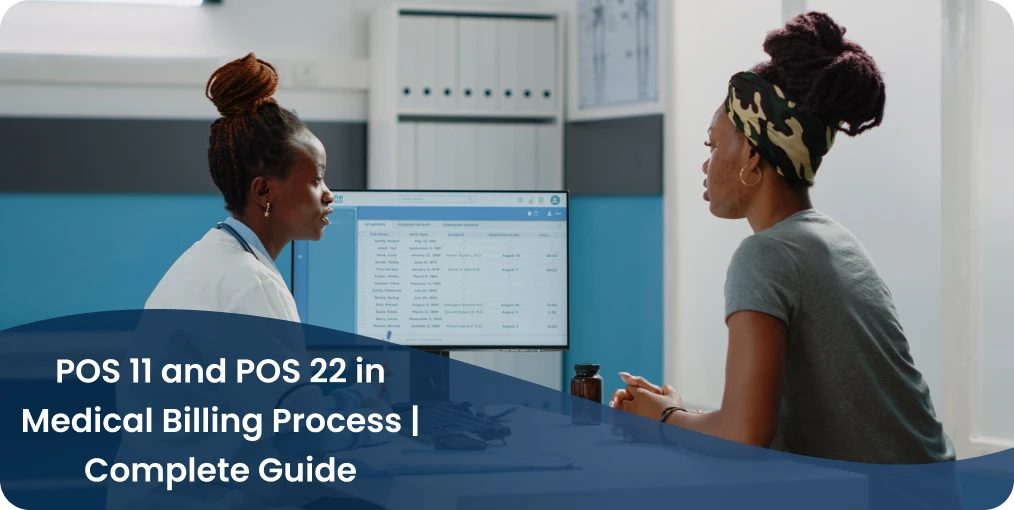
In the healthcare industry, accurate billing and precise communication are essential for smooth operations and timely reimbursements. One commonly used term in medical billing is the medical abbreviation POS, which stands for Place of Service. Understanding this abbreviation and its relevance is crucial for providers, laboratories, and billing companies striving to maintain compliance and financial accuracy. Along with this, modern laboratory billing solutions are helping medical facilities streamline claims, reduce errors, and optimize revenue cycles. This article explores the meaning of POS, its importance in billing, and how advanced billing solutions can transform laboratory operations.
What Does the Medical Abbreviation POS Mean?
The medical abbreviation POS refers to the Place of Service code that indicates where a patient received medical care. These codes are assigned by the Centers for Medicare & Medicaid Services (CMS) and are used on insurance claims to specify the setting in which a service was performed.
Each POS code corresponds to a different healthcare environment—for example, a hospital, outpatient facility, urgent care center, or independent laboratory. Accuracy in selecting the correct POS code is crucial because it directly affects reimbursement rates, claim acceptance, and insurance processing.
For laboratories, POS codes determine whether services were provided in-house, at an outpatient location, or as part of a physician’s office visit. Misreporting the POS can lead to claim denials, delays, or even compliance issues.
Why the Medical Abbreviation POS Matters in Laboratory Billing
Laboratories handle a high volume of tests daily, making billing accuracy especially important. The medical abbreviation POS plays a major role in laboratory billing because it informs insurers about the testing location and determines the appropriate payment structure.
For example:
-
If a test is performed in an independent lab, a specific POS code must be used.
-
If the sample is collected in a physician’s office but processed at another location, the claim must reflect that accurately.
-
Using incorrect POS codes could result in the insurer reducing payment or rejecting the claim entirely.
This highlights the need for reliable laboratory billing solutions that ensure correct POS coding and error-free claim submission.
Challenges Laboratories Face With POS Coding
Laboratory billing is often complex due to:
1. Multiple Testing Locations
Samples may be collected at one place and processed at another, requiring accurate POS representation.
2. Frequent Code Updates
CMS regularly updates billing and POS codes, making it necessary for laboratories to stay informed.
3. Claim Denials and Revisions
Incorrect POS codes are a common cause of claim denials, leading to delays and added administrative work.
4. High Volume of Daily Claims
Laboratories must manage thousands of claims, making manual POS verification both time-consuming and error-prone.
These challenges emphasize the importance of efficient and automated billing support.
How Laboratory Billing Solutions Improve POS Accuracy
Modern laboratory billing solutions are designed to simplify the billing process while reducing human error. These solutions offer several benefits:
1. Automated POS Code Selection
Advanced billing software automatically assigns the correct POS code based on where the service occurred, reducing manual mistakes.
2. Integration With EHR and LIS Systems
Seamless integration with Electronic Health Records (EHR) and Laboratory Information Systems (LIS) ensures complete and accurate data transfer.
3. Real-Time Claim Scrubbing
Claims are reviewed before submission to ensure the POS and other required fields meet payer requirements.
4. Faster Reimbursement Cycles
With fewer errors, laboratories experience quicker payment processing and improved revenue flow.
5. Compliance With Payer Guidelines
Built-in rules and updates ensure laboratories stay compliant with the latest CMS and insurance payer standards.
In short, implementing laboratory billing solutions is one of the most effective ways to guarantee proper use of the medical abbreviation POS in every claim.
The Connection Between POS Accuracy and Revenue Cycle Management
Accurate POS coding is directly linked to successful revenue cycle management (RCM). When laboratories consistently report correct POS codes:
-
Claim acceptance rates increase
-
Revenue leakage decreases
-
Administrative costs go down
-
Payment turnaround time improves
Billing companies specializing in laboratory RCM understand how crucial the medical abbreviation POS is and ensure that all claims reflect the appropriate code before submission. This reduces denial rates and enhances financial performance for laboratories of all sizes.
Conclusion
Understanding the medical abbreviation POS is essential for accurate billing, especially in laboratory environments where services may be performed across multiple settings. Proper POS coding ensures compliance, prevents claim denials, and maintains smooth communication between providers and insurance companies.
With the growing complexity of healthcare billing, modern laboratory billing solutions offer an efficient and reliable way to manage POS codes, reduce errors, and improve reimbursement outcomes. Laboratories that adopt these solutions can significantly enhance their operational efficiency and maintain stronger financial stability.


 Dutch
Dutch
 English
 Arabic
 עברית
עברית
 French
 Spanish
 Portuguese
 Deutsch
 Turkish
 Italiano
 Russian
 Romaian
 Portuguese (Brazil)
 Greek
Greek