


Optimal Field Strategy: A Detailed Mulch Film Application Guide to Get Maximum Benefits
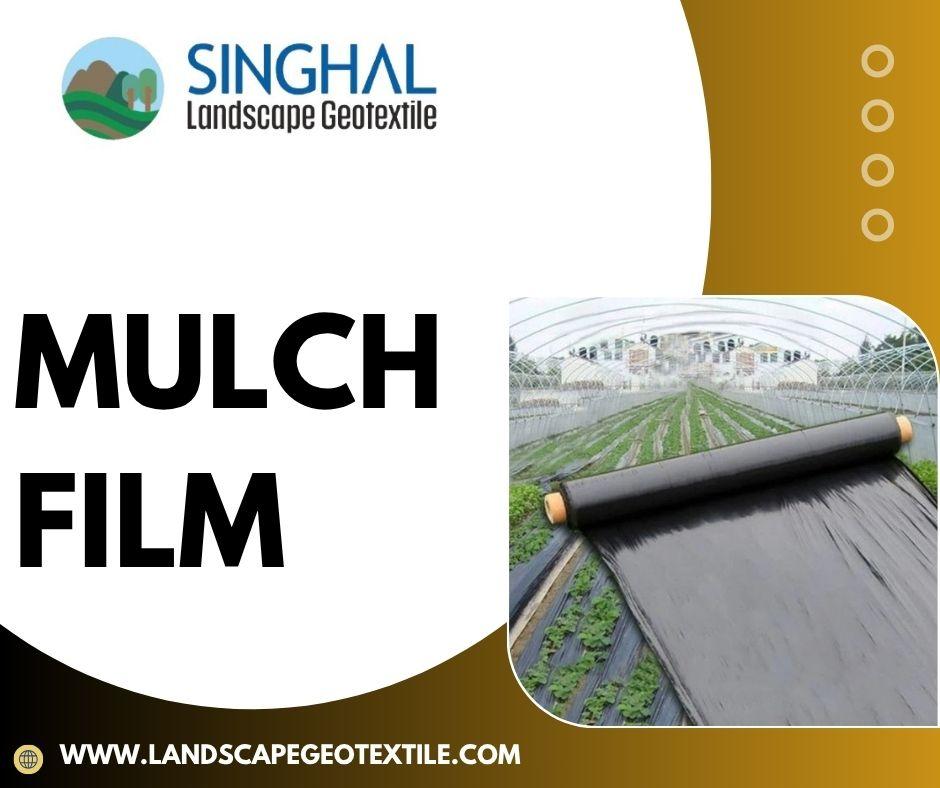
Using top-quality agricultural mulching films as part of your crop production has not only been a luxury option, but it has now become a must-have for anyone looking to optimize yield while saving water and energy. Before going into the details of the installation, it is very necessary to find out first What is mulch film and how significant it is. To put it simply, a mulch film is a membrane made of thin polyester that is stretched on the ground and hence is the soil's protector.
The role of this layer is to disable the evaporation of water, the spread of weeds, the washing away of soil, and even the changes in the temperature it is a powerful means. What it does is to make a controlled mini-atmosphere for the plant roots, which is the main reason for rapid growth and better-quality products. But the brilliance of this revolutionary substance almost entirely depends on how accurately and nicely its installation is done. If the work is done badly, the benefits can be reversed, thus it may result in torn materials, up to no good weed control, and uneven soil temperatures.
That is why learning the installation method is the first and compulsory non-negotiable step to ensure the highest benefits.
Preparation is the Most Important Thing: The Soil and the Bed Base
It is said that the fruit of any good deed is already in the work, and this is also the case for every single outdoor application of a mulch film that has been unveiled. How the soil is prepared is the very foundation on which a strong and efficient mulching network is built. The area should be cleaned of all kinds of rubbish very well namely - stones, big clods, and also stubble and old residues of the crops. The hard or sharp parts can easily puncture the film during the installation or the whole season creating rips that allow weeds to grow and moisture to escape.
After the removal of debris, the soil needs to be worked to an even and attractive surface which is perfectly suitable for the film to make contact with. The uneven surface will result in air spaces between the film and the soil, which can lead to temperature differences and weaken the effect of weed suppression. At the same time, all necessary soil amendments, fertilizers, and, most importantly, the irrigation system, usually drip tape, should be ready. Installing the drip tape before the mulch film allows for the system to be the proper position under the film to deliver water and nutrients straight to the root zone, thus, the watering is done in a very efficient way and water loss, which is the main beneficiary of using Agricultural mulching films, is kept to the minimum.
Selecting the Proper Film: Thickness and Color
The decision regarding the color and the thickness of the film depends on the factors like the type of crop, weather, and also the expected result. One of the main uses of black films is weed prevention, as they cut off almost all sun rays, thus no seeds germinate. Besides that, they heat the area a lot which is very useful for the first period of the year that is done in the cold place. White-on-black or silver-on-black films, on the other hand, are used in hot areas. This is because the side that is shiny (silver or white) is up, and hence the sun's rays are reflected thus, the soil is kept cool.)
At the same time, the black side is still serving excellent weed prevention. Clear films are the best in terms of heating the soil, but they are not preferred as they are not able to stop the growth of weeds effectively. While deciding on the film's durability, the film's thickness, in most cases, is very important (measured in microns). If it is a thin one, then the price will be lower but at the same time, there is a higher chance of tearing, particularly in places with heavy traffic and rough soil. Thus, a well-known manufacturer of mulch film plants will have an array of choices, and by consulting them you will get precise instructions that are suitable for your location and type of crop.
The Installation: How to Get Just the Right Tension
Film installation is normally done by a special machine and is quite a technical job; however, if you have a very small piece of land, then you can do it manually. The main aim is to put the film on the right tension over the prepared beds without overstretching it. Too much tension will lead to the tearing of the film in a very short time, while insufficient tension will lead to the film flapping, which can cause it to be torn by the wind, and also poor soil contact. The film should be laid tightly against the raised bed.
To secure the edges, the film is pressed down firmly into the ground on both sides of the bed. Generally, this is accomplished by burying the edges deep enough to hold them against wind lift (one of the most common causes of installation failure). The machine’s hilling disks or shovels do this work by making a small furrow, tucking the film edge in, and covering it with soil. It is very important that the edge seal is secure; this not only keeps the film intact but also helps to lock in soil moisture and, at the same time, prevent the wind from lifting and damaging the whole installation thus making it weaker.
Precision in Cutting and Planting
After the agricultural mulching films have been properly secured, the following step is to make the holes for planting or transplanting. The dimensions and distance of these holes are very important. Besides, they are supposed to provide enough space to accommodate the root ball of a plant, at the same time being small enough not to allow weed growth and excessive moisture loss. The best types of small and neat cuts (usually in the form of X or cross) are those that close naturally around the stem of the plant.
Maintenance and Season Extension
The advantages of the mulch film do not stop at the very moment of installation and planting. Throughout the growing season, a little maintenance will keep its performance at a high level. It means that the area should be checked for any kind of tearing regularly, which should be quickly fixed with the use of a special agricultural tape to continue the film’s function in weed control and moisture retention without interruption.
Most importantly, mulching films, when used in conjunction with drip irrigation systems, which are placed deliberately under the film, enable water to be delivered effectively with the least amount of evaporation.
Besides that, in landscaping and erosion control, similar principles of soil preparation and material securing are followed, which frequently include the use of a Singhal Landscape geotextile, providing ultimate soil stabilization and separation underneath the decorative or protective layers. Unfortunately, the specific properties of the mulch film are needed for the continuation of the crop.
By the end of the season, the majority of traditional films have to be gathered and disposed of in the proper way, however, some modern Mulch film plant manufacturers already offer biodegradable products that can be mixed with the soil directly.
Conclusion
The successful installation of agricultural mulching films is a pin-pointed, multi-layered operation that leads to a great profit in the long run through the increase of crop yields, better water conservation, and the substantial decrease of the costs needed for weed control. Each step, starting from detailed soil preparation, correct film selection, attaining the right tension, up to fastening the edges, is a vital element of getting the maximum benefit of the film.
Farmers that follow these instructions to the letter are in the best position to utilize this technology for the production of agriculture that is both sustainable and profitable.
In this case, the use of specially designed hole-punching tools is highly recommended as they provide uniformity and are fast, especially when it comes to large operations. There should be as little time as possible between cutting the hole and planting the seedling so that weeds don’t have a chance to grow rapidly in the exposed soil or that the planting area doesn’t get dried out. The planting itself must be done cautiously; workers should not step on the film outside the plant beds as this will compress the soil under and the film will get worn too fast.
Frequently Asked Questions (FAQ)
Q: What is mulch film, and how is it different from a landscape fabric?
A: Basically, Mulch film is a thin plastic (polyethylene) sheet used largely in agriculture to cool off the soil, it is also used to conserve the water in the soil and suppress the growth of weeds in crop rows. While Singhal Landscape geotextile fabric is a typically woven or nonwoven permeable material used mostly for long-term weed control, soil separation, and stabilization in permanent areas or general landscaping which allows water and air to pass through.
Q: How do agricultural mulching films significantly reduce the need for irrigation?
A: Agricultural mulching films, cover the soil, thus, block the direct evaporation of water from the soil surface caused by the sun and the wind. This dramatically increases the water-holding capacity of the soil and decreases the number of times irrigation should be done and the volume of the water needed for irrigation especially when accompanied by a drip system underneath.
Q: Which mulch film plant manufacturers offer the most durable biodegradable options?
A: Globally, several major mulch film plant manufacturers are transitioning to biodegradable mulches made from plant-based polymers which are designed to decompose after the growing season. The leading companies in this segment are usually those that are focused on sustainable material science; however, regional suppliers also have some good-quality products to offer.
Q: Can I reuse mulch film for multiple planting seasons?
A: Generally, polyethylene agricultural mulching films are only single-use ones. Trying to reuse them often causes them to tear, lose their UV resistance, and have a low performance of the following seasons. Some thicker and more durable films (for example, 50 microns and more) might be multi-season ones for certain perennial crops.
Q: Who is the largest supplier of Mulch film?
A: The market is globally very competitive; however, a few large chemical and plastic companies, together with major agricultural solution providers, are acting as the largest suppliers. Singhal Landscape geotextile play a great role in both manufacturing and consumption.
Q: Who is the largest exporter of Mulch film?
A: Singhal Landscape geotextile is always ranked as one of the biggest global exporters of mulch film. After it, countries like India and Vietnam come. All these reflect their significant manufacturing capabilities and global trade presence in agricultural products.
Q: Who is the largest manufacturer of Mulch film?
A: The Singhal Landscape geotextile largest manufacturers are generally top international groups who are in the polymer production business, one of such groups is BASF, Armando Alvarez, and RKW Group, who have the potential to produce a massive quantity of agricultural films for worldwide distribution.
Q: Why is securing the edges of the mulch film so crucial for its performance?
A: One main point of a securely buried and covered edge, which is a principle shared in the installation of any similar ground cover like a Singhal Landscape geotextile, apart from preventing the wind from picking up and flapping the film thus tearing it, is that it provides a tight seal that stops not only the escaping of moisture vapor but also the growing of weeds from up the sides.


 English
 Arabic
 עברית
עברית
 French
 Spanish
 Portuguese
 Deutsch
 Turkish
 Dutch
Dutch
 Russian
 Romaian
 Portuguese (Brazil)
 Greek
Greek