


How to Launch a Charcoal Manufacturing Unit: Investment, Profit Margins & Market Demand
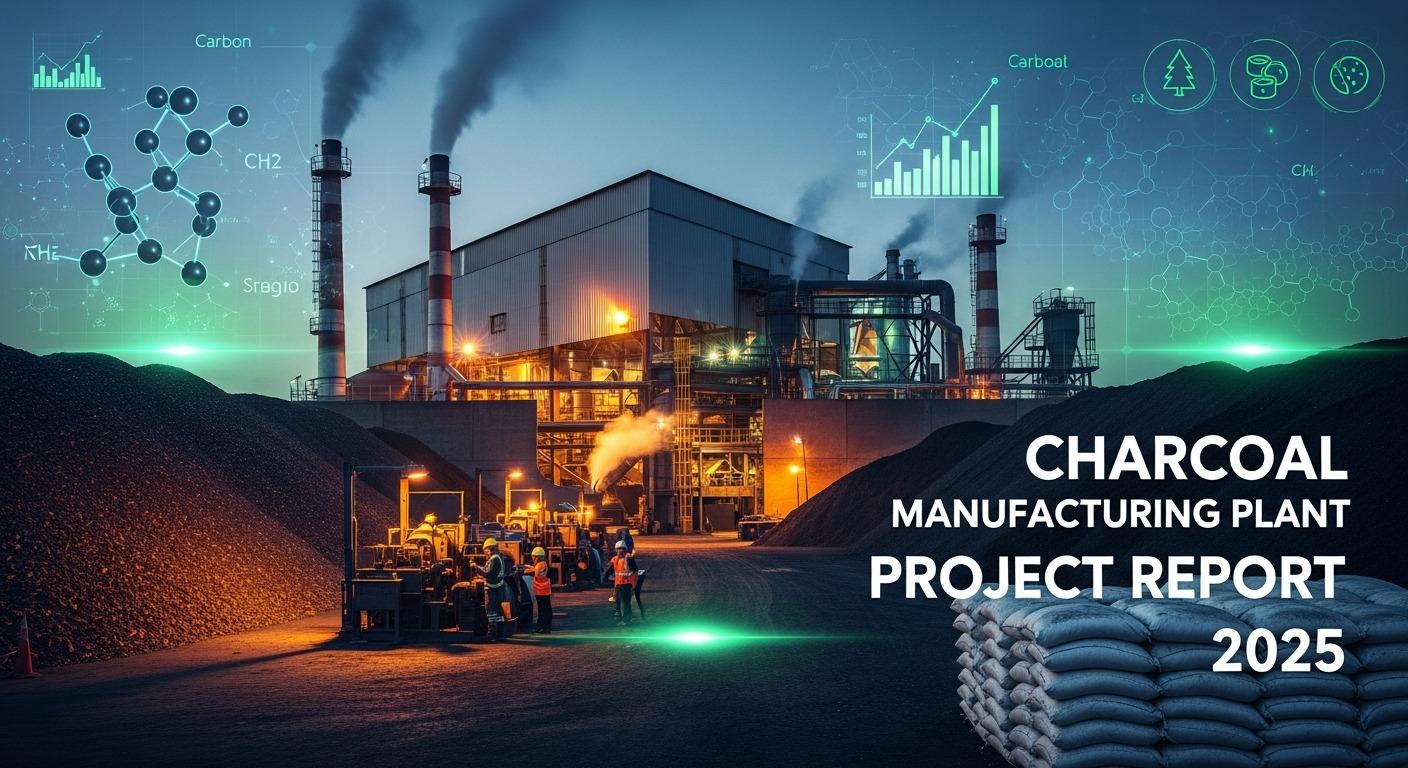
IMARC Group’s “Charcoal Manufacturing Plant Project Report 2025: Industry Trends, Plant Setup, Machinery, Raw Materials, Investment Opportunities, Cost and Revenue” offers a detailed and practical guide for entrepreneurs and businesses looking to understand how to start a charcoal manufacturing plant effectively. The report includes in-depth analysis of capital investment requirements, project financing options, working capital needs, and projected returns.
This comprehensive charcoal manufacturing business plan outlines every critical step involved in setting up a manufacturing plant successful unit from understanding the industry landscape to planning for real-world challenges. It provides valuable insights into essential components such as charcoal manufacturing plant setup cost, raw material requirements, utility needs, infrastructure setup, and packaging logistics.
What is Charcoal?
Charcoal is a black, carbon-rich fuel obtained by heating wood or organic materials in the absence of oxygen. It has high calorific value, burns cleanly, and produces less smoke than firewood. Charcoal is widely used in restaurants, metallurgy industries, household fuel, water filtration, and chemical applications.
The production is simple and can be scaled from small units to fully automated plants, making it an attractive manufacturing business.
Market Outlook for Charcoal Manufacturing
The charcoal market is supported by rising demand from industries such as steel, cement, activated carbon plants, chemicals, and commercial barbeque users. The global shift toward eco-friendly fuels and renewable biomass energy sources is also driving growth. Many developing countries still rely on charcoal for household cooking and heating, ensuring strong ongoing demand.
Governments are encouraging sustainable biomass charcoal production, creating opportunities for investors to enter this sector.
Request for a Sample Report: https://www.imarcgroup.com/charcoal-manufacturing-plant-project-report/requestsample
Charcoal Manufacturing Process
The charcoal production process generally involves:
- Wood and biomass collection
- Drying and size reduction
- Carbonization in kilns or reactors without oxygen
- Cooling of charcoal
- Screening and crushing to required size
- Packaging for industrial or retail usage
Advanced plants use continuous carbonization technology, which improves efficiency and product quality.
Is Charcoal Manufacturing Profitable? (60 Words)
Yes, charcoal manufacturing is a highly profitable business due to strong demand, low production costs, and the ability to source cheap raw materials like wood waste, coconut shells, bamboo, and agricultural residues. Industrial and retail market opportunities offer attractive profit margins. Scalable plant sizes also allow both small and large investors to enter the market successfully.
Key Insights Covered in the Charcoal Manufacturing Plant Report
- Market trends and industry growth overview
- Market segmentation by applications and end-use industries
- Regional demand and production analysis
- Price trends for raw materials and charcoal varieties
- Post-COVID market recovery and growth forecast
- Global competitiveness and investment opportunities
Key Aspects Required for Setting Up a Charcoal Plant
The report provides important technical and commercial information to guide project execution:
- Detailed process flow with unit operations involved
- Raw material requirements and mass balance
- Quality control tests and standards
- Safety measures and environmental compliance
- Workforce planning for efficient operation
Project Details, Requirements, and Costs Involved
- Land & Site Development: Ideal location with raw material availability and access to transport networks
- Plant Layout: Efficient setup for material flow and safety
- Machinery Requirements & Cost: Kilns/retorts, dryers, crushers, conveyors, packaging machines
- Raw Materials: Wood logs, coconut shells, bamboo, agricultural residue
- Packaging Requirements: Bags, sealing units, labeling system
- Transportation Costs: Logistics for raw materials & finished products
- Utilities: Power, water, fuel
- Human Resource Requirements: Skilled and unskilled labor needs & salaries
CAPEX/OPEX and ROI Analysis for Charcoal Manufacturing Plant
- Capital Investment: Cost for land, building, machinery, installation
- Operating Costs: Raw materials, utilities, labor, and maintenance
- Revenue Projections: Based on industrial and retail charcoal sales
- Profitability Analysis: Gross margins, NPV, break-even calculations
- ROI: Attractive returns due to low manufacturing cost structure
- Taxation & Depreciation: Included for long-term financial planning
Business Opportunities in Charcoal Manufacturing
You can target multiple customer segments:
- BBQ restaurants, food outlets, and supermarkets
- Metallurgy and steel industries
- Fuel supply for rural household usage
- Activated carbon manufacturers
- Chemical industries using charcoal as a reducing agent
- Export markets in Europe, Gulf, and Africa
Offering branded and assorted charcoal packs (BBQ charcoal briquettes, premium retail charcoal, industrial-grade charcoal) can improve revenue.
Ask Analyst for Customization: https://www.imarcgroup.com/request?type=report&id=10476&flag=C
FAQS
- What raw materials are used in charcoal production?
Wood, coconut shells, bamboo, and agricultural waste are commonly used.
- What type of machinery is needed for a charcoal plant?
Kilns, dryers, crushers, conveyors, and packaging machines are essential. - Can charcoal production be environment-friendly?
Yes, using modern kilns reduces emissions and improves sustainability. - What is the production capacity of a small plant?
Small plants produce 1–5 tons of charcoal per day. - Do charcoal products require quality certification?
Yes, industrial buyers may require ash content and calorific value tests.
How IMARC Can Help?
IMARC Group is a global management consulting firm that helps the world’s most ambitious changemakers to create a lasting impact. The company provide a comprehensive suite of market entry and expansion services. IMARC offerings include thorough market assessment, feasibility studies, company incorporation assistance, factory setup support, regulatory approvals and licensing navigation, branding, marketing and sales strategies, competitive landscape and benchmarking analyses, pricing and cost research, and procurement research.
Services:
- Plant Setup
- Factory Audit Services
- Regulatory Approvals, and Licensing
- Company Incorporation
- Incubation Services
- Recruitment Services
- Marketing and Sales
Contact Us:
IMARC Group
134 N 4th St. Brooklyn, NY 11249, USA
Email: sales@imarcgroup.com
Tel No:(D) +91 120 433 0800
United States: (+1-201971-6302)


 Spanish
 English
 Arabic
 עברית
עברית
 French
 Portuguese
 Deutsch
 Turkish
 Dutch
Dutch
 Italiano
 Russian
 Romaian
 Portuguese (Brazil)
 Greek
Greek