


The Ultimate Guide to Volleyball Court Construction: Materials, Cost & Standards
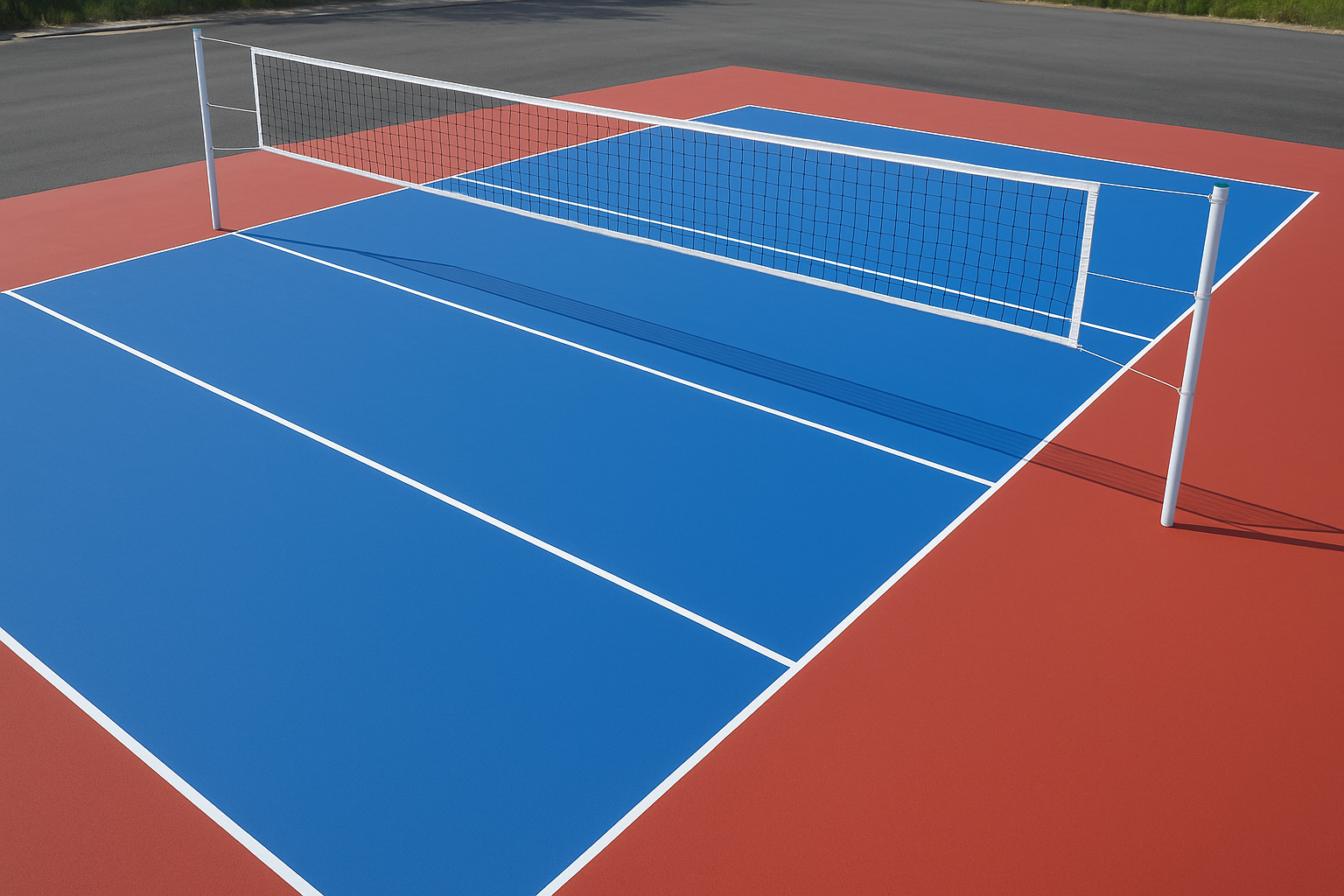
Building a volleyball court is a long-term investment that requires expert planning, the right materials, and a clear understanding of safety and performance standards. A professionally designed court not only enhances athlete performance but also increases the lifespan of the flooring. Whether you want to build your own volleyball court or construct a professional sports facility, proper planning is essential. In this guide, we explain every stage of Volleyball Court Construction, including materials, layout standards, cost factors, and best practices for long-lasting results.
Understanding Volleyball Court Construction Requirements
Before starting any project, it’s important to understand the official dimensions and structural needs of a volleyball court. These standards ensure fair play, player safety, and uniformity across all competitive courts.
Court Dimensions
-
A standard volleyball court measures 18 meters long and 9 meters wide, which is required for professional and recreational play.
-
It also needs a free zone of at least 3 meters on all sides, providing players safe space to dive, move, and receive the ball.
Total Playing Space
-
The full recommended area including free zones is 24m x 15m, allowing adequate movement around the court.
-
This ensures there is no interference from boundaries, walls, or obstacles during competitive matches.
Net & Pole Standards
-
The standard net height is 2.43m for men and 2.24m for women, based on global volleyball regulations.
-
Poles must be stable, padded, and strong enough to maintain net tension without wobbling.
These basics form the backbone of any Volleyball Court Construction project and help maintain professional consistency.
Choosing the Right Volleyball Court Material
Selecting the right volleyball court material determines performance, shock absorption, durability, and player comfort. The surface must support fast movements, quick jumps, and safe landings without causing injuries.
A. Indoor Volleyball Court Flooring Options
Indoor courts require flooring that provides controlled bounce, stability, and comfort. The material must withstand continuous movement and pressure without wearing out quickly.
Synthetic Volleyball Court Flooring
-
A synthetic volleyball court surface delivers uniform bounce, excellent grip, and high shock absorption, making it ideal for professional-level play.
-
It is also easy to clean, visually appealing, and durable, making it a top choice for sports academies and indoor stadiums.
Synthetic Acrylic Volleyball Court
-
A synthetic acrylic volleyball court offers UV resistance, a customizable cushion base, and vibrant colors that stay bright for years.
-
These surfaces are long-lasting, weather-resistant, and suitable for both indoor and outdoor courts with minimal maintenance.
Vinyl Sports Flooring
-
Vinyl flooring provides flexibility, shock absorption, and consistent performance, making it suitable for multipurpose halls.
-
It needs expert installation to avoid gaps or uneven surfaces, which can affect ball bounce and safety.
B. Outdoor Volleyball Court Flooring Options
Outdoor courts need tough materials due to heat, rain, and constant exposure to harsh weather. Outdoor volleyball court flooring must be durable, anti-skid, and weather-proof.
Acrylic Sports Flooring
-
Acrylic flooring is one of the most reliable outdoor sports surfaces because of its UV resistance, strong grip, and long lifespan.
-
It maintains consistent surface quality even under extreme weather and requires minimal upkeep, making it cost-effective.
Artificial Turf
-
Artificial turf provides a soft landing surface and reduces impact injuries, making it suitable for training and recreational play.
-
However, turf is not ideal for professional matches due to its uneven bounce and slower gameplay.
Sand Courts (Beach Volleyball)
-
Sand courts offer a fun, low-cost alternative and are commonly used in beach volleyball or casual gameplay.
-
Sand reduces impact on the knees and joints but requires regular leveling and maintenance.
Choosing the right volleyball court flooring material determines the performance and longevity of the court.
Step-by-Step Volleyball Court Construction Process
A successful Volleyball Court Construction project follows a structured, professional process. Each step ensures that the foundation, flooring, and finishing meet international sports standards.
Step 1: Site Selection & Ground Preparation
-
Select a flat site with natural or engineered drainage to avoid water accumulation and surface damage.
-
The ground must be cleared, leveled, and compacted properly to provide a stable base for further construction.
Step 2: Subbase Construction
-
A strong subbase of WMM, stone soling, or concrete ensures that the court remains stable and crack-free for years.
-
The subbase must be compacted in multiple layers to prevent sinking, unevenness, or long-term structural issues.
Step 3: Laying the Surface Material
-
For acrylic or synthetic flooring, cushioning layers and top coats are applied to achieve the required performance quality.
-
Each layer plays a role in enhancing grip, reducing injuries, and improving the overall playing experience.
Step 4: Court Marking
-
Precision markings are essential for compliance with international volleyball standards and accurate gameplay.
-
High-quality acrylic or PU-based line paints ensure sharp, long-lasting lines that don’t fade easily.
Step 5: Net & Pole Installation
-
Heavy-duty, rust-resistant net posts are installed securely, ensuring proper tension throughout the game.
-
Padding around posts ensures safety during high-speed dives and boundary plays.
This structured process ensures long-lasting and performance-driven results from your Volleyball Court Construction project.
Cost of Volleyball Court Construction
The cost varies depending on materials, location, and labor. Understanding these factors helps plan the project effectively and choose the best quality within budget.
Acrylic Outdoor Volleyball Court
-
Typically costs between ₹2.5 lakh to ₹5 lakh, depending on the cushioning and number of layers.
-
Acrylic is ideal for long-term outdoor use because it is weather-tolerant and low-maintenance.
Synthetic Indoor Volleyball Court
-
Costs range from ₹4 lakh to ₹10 lakh, depending on whether PU, PVC, or hybrid materials are selected.
-
These floors offer superior performance, comfort, and durability for competitive play.
Beach Volleyball Sand Court
-
A sand court costs around ₹1 lakh to ₹2 lakh, making it the most budget-friendly option.
-
It requires a large volume of high-quality sand and proper leveling for safe and enjoyable play.
Cost Factors to Consider
-
The choice of volleyball court flooring material plays the biggest role in total project cost.
-
Additional expenses such as fencing, lighting, drainage, and accessories also influence the budget.
Maintenance Tips for Long-Lasting Court Performance
Even the best volleyball courts require regular maintenance to stay in top condition throughout the year.
-
Clean the surface often to remove dust, leaves, and debris that may affect grip or cause discoloration.
-
Inspect the flooring regularly for cracks or wear patterns and schedule resurfacing every few years to maintain performance.
-
Ensure the drainage system is functioning well to prevent waterlogging or structural damage.
-
Avoid using heavy machinery or sharp objects on the surface to prevent scratches or dents.
Consistent care keeps your volleyball court flooring smooth, safe, and reliable.
Conclusion
A high-quality volleyball court is the result of careful planning, the right volleyball court material, and professional installation. Whether it is an indoor arena or an outdoor acrylic setup, choosing the correct volleyball court flooring material ensures long-term durability, safety, and excellent playability. With the right approach to Volleyball Court Construction, you can build a facility that provides premium performance and withstands years of competitive action.



 English
 Arabic
 French
 Spanish
 Portuguese
 Deutsch
 Turkish
 Dutch
Dutch
 Italiano
 Russian
 Romaian
 Portuguese (Brazil)
 Greek
Greek