


Laser Welding Tools for Precision Manufacturing and Modern Industrial Applications
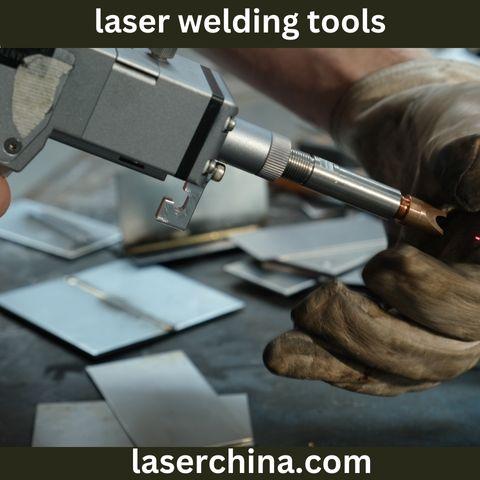
Laser welding tools have transformed the way industries join metals and alloys, offering unmatched accuracy and speed in modern manufacturing. From aerospace to automotive, medical devices to electronics, these tools have made their mark by enabling stronger, cleaner, and more reliable welds. Understanding laser welding tools in detail helps professionals see their role in reshaping production lines, cutting down time, and achieving results that traditional welding methods struggle to deliver.
At the core, laser welding tools rely on highly concentrated beams of light to melt and fuse materials. This technology eliminates the need for filler materials in many applications, reduces deformation in delicate components, and provides consistent welding performance. For businesses focused on efficiency, precision, and long-term reliability, laser welding tools stand out as a vital part of industrial operations.
The Working Principle of Laser Welding Tools
Laser welding tools operate by focusing a laser beam onto a small area of the workpiece. The energy of the beam is absorbed by the material, causing it to heat rapidly and create a molten pool. Once the beam moves along the joint line, the molten material solidifies into a strong weld.
There are two main modes of laser welding:
-
Conduction Welding: Ideal for thin materials, it involves heating the surface without deep penetration.
-
Keyhole Welding: Used for thicker sections, it creates a deep, narrow weld by vaporizing a small portion of the material.
Both techniques are widely used depending on the material thickness, required strength, and precision of the weld.
Types of Laser Welding Tools
Industries use different types of laser welding tools based on their needs:
-
Fiber Laser Welding Tools – Known for high efficiency and long service life, these tools are widely used in automotive and electronics industries.
-
Nd:YAG Laser Welding Tools – Suitable for both continuous and pulsed modes, making them versatile for different materials.
-
CO₂ Laser Welding Tools – Commonly used for deeper penetration and heavy-duty industrial applications.
-
Handheld Laser Welding Tools – Portable and user-friendly, designed for flexible applications on-site or in workshops.
Each type has a specific purpose, allowing industries to match their welding needs with the right tool.
Applications of Laser Welding Tools in Different Industries
Laser welding tools are not limited to one sector—they have applications across multiple industries:
-
Automotive Industry: Used for welding gear components, car bodies, and battery packs for electric vehicles.
-
Aerospace: Ensures precision in turbine blades, engine components, and lightweight structural parts.
-
Medical Devices: Enables the production of surgical instruments, implants, and pacemakers with strict quality requirements.
-
Electronics: Supports micro-welding in circuit boards, sensors, and small connectors.
-
Jewelry and Artisanal Work: Helps in crafting fine, intricate joints without visible marks.
The adaptability of laser welding tools makes them indispensable in modern production environments.
Why Industries Rely on Laser Welding Tools
In fast-paced industrial environments, accuracy and speed often decide the success of production. Laser welding tools bring both. Their ability to produce narrow, deep welds without excess heat reduces the risk of defects. Moreover, their precision ensures minimal post-processing.
Industries that require mass production find laser welding tools valuable because they can integrate easily with automation systems. Robotic arms paired with laser welders ensure round-the-clock productivity and consistent output, even for complex designs.
Material Compatibility with Laser Welding Tools
One of the major strengths of laser welding tools is their compatibility with a wide range of materials:
-
Metals: Stainless steel, carbon steel, aluminum, titanium, nickel alloys, and copper.
-
Non-metals: Certain ceramics and polymers with specialized coatings.
This flexibility allows engineers to use laser welding tools in mixed-material designs, ensuring durability without sacrificing design freedom.
Safety and Operational Considerations
While laser welding tools are powerful, they demand proper handling. Operators must follow safety measures like wearing protective eyewear, ensuring proper ventilation, and using enclosures or shields to prevent laser exposure. Training is also essential so that teams can operate these machines with confidence while maintaining workplace safety.
Integration of Laser Welding Tools in Production Lines
Modern factories focus on automation, and laser welding tools integrate seamlessly into these systems. CNC machines, robotic arms, and advanced software allow precise control over welding parameters. This not only reduces human error but also enhances overall productivity.
For example, in the automotive industry, robotic laser welding stations operate with precision in assembling vehicle bodies, welding thousands of joints in less time than traditional methods. This integration is one of the driving factors behind the widespread adoption of laser welding tools.
Future of Laser Welding Tools
The future of laser welding tools looks promising as industries demand higher precision and faster production cycles. With advancements in fiber laser technology, tools are becoming more compact, efficient, and cost-effective. Integration with AI-driven monitoring systems ensures real-time quality checks, reducing defects and improving reliability.
Additive manufacturing also benefits from laser welding tools, where precision is crucial in building parts layer by layer. As industries push toward sustainability, the energy efficiency of these tools adds another layer of value.
Final Thoughts
Laser welding tools represent a major step forward in industrial manufacturing. Their ability to deliver precision, reliability, and efficiency makes them essential across industries from automotive to medical, aerospace to electronics. As technology continues to evolve, these tools will only grow more advanced, driving the future of manufacturing into a new era of productivity and innovation.


 English
 Arabic
 עברית
עברית
 French
 Spanish
 Portuguese
 Deutsch
 Turkish
 Dutch
Dutch
 Italiano
 Russian
 Romaian
 Portuguese (Brazil)