


The Unseen Force: Sound Exciters in Movies and Gaming
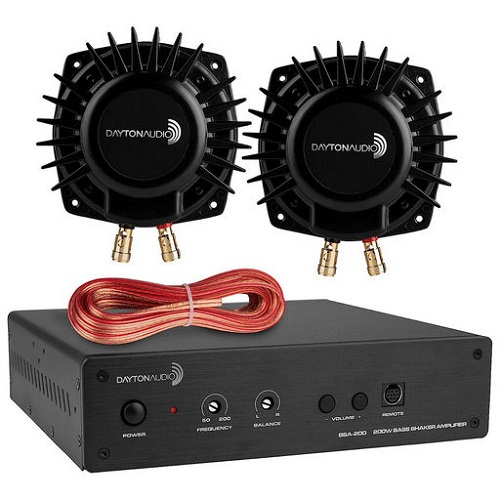
You’re in a darkened cinema. On screen, a towering Kaiju stomps through the streets of Tokyo. The roar is deafening, but it's more than that, you can feel the impact of its footsteps in your chest. The floor seems to vibrate with every earth-shattering step. Later, you’re at home, deep into a racing game. You misjudge a corner and your car spins out, clipping the barrier. You don't just see it happen; you feel the jarring thump through your seat, a physical jolt that makes your heart skip a beat.
These moments of deep immersion don't happen by accident. While we often credit stunning visuals and powerful surround sound, there's another, more subtle technology at play. It’s an unseen force that bypasses your ears and speaks directly to your body. This is the world of haptic feedback, and its unsung hero is a special kind of sound exciter known as a tactile transducer, or more affectionately, a "bass shaker."
For years, these clever devices have been the secret weapon of theme parks, cinemas, and hardcore gamers, creating experiences that are felt as much as they are seen. Let's pull back the curtain and explore how this technology is used in pop culture to make our entertainment more believable, exciting, and immersive.
It’s Not Just Sound, It’s a Feeling
Before we go further, what exactly are we talking about? A regular sound exciter is a small device that turns a surface into a speaker. A tactile transducer, or bass shaker, is a specialized, high-power version of this. Instead of being optimized to create audible sound, it's designed to produce powerful, low-frequency vibrations.
You bolt it to a solid structure, like a cinema seat, a couch frame, or a gaming rig, and feed it the low-frequency (bass) channel from an audio source. When a deep sound occurs, like an explosion or an engine roar, the shaker physically vibrates the structure it’s attached to. It’s a simple concept with a profoundly powerful effect: it tricks your brain into thinking you’re part of the action.
4D Cinemas: Shaking Up the Movie Experience
Have you ever seen a movie advertised as being in "4D"? This is where most people have their first encounter with tactile transducers. These cinemas aim to create a multi-sensory experience by adding physical effects synchronized with the film, like wind, scents, and motion. The most crucial of these effects is haptic feedback.
When you sit in a 4D cinema seat, you're sitting on a sophisticated piece of haptic technology. Integrated into the seat frame are one or more powerful bass shakers. These are connected to a special audio track that isolates key low-frequency moments.
-
Explosions and Impacts: During an action sequence, every explosion, car crash, and punch is translated into a physical jolt. This elevates the experience from watching a battle to feeling like you’re on the battlefield.
-
Environmental Ambiance: It’s not just about the big moments. The subtle rumble of a spaceship's engines, the thumping bass of a nightclub scene, or the galloping of horses can all be felt, creating a constant sense of presence and realism.
-
Musical Enhancement: In musicals or films with powerful scores, the deep notes of a bass guitar or the beat of a drum can be translated into a physical pulse, connecting the audience to the music in a more visceral way.
Without tactile transducers, the 4D experience would feel hollow. They are the core technology that bridges the gap between watching a film and experiencing it.
Gaming and Sim Racing: Putting You in the Driver’s Seat
Nowhere has haptic feedback been more enthusiastically embraced than in the world of gaming, particularly in simulation racing (sim racing). For serious sim racers, immersion is everything. They spend thousands on realistic steering wheels, pedals, and wrap-around monitors to replicate the feeling of being in a real race car. But the most significant leap in realism often comes from adding bass shakers.
By attaching tactile transducers to their racing rig, players can feel every nuance of the car and the track.
-
Engine Rumble: You can feel the RPM of the engine vibrate through your seat, changing in intensity as you accelerate and shift gears.
-
Road Texture: Driving over a smooth track feels different from hitting a bumpy curb or driving on gravel. The shakers translate the game's audio cues for different surfaces into distinct vibrational feedback.
-
Tire Feedback: This is the holy grail for serious racers. With the right software (like SimHub), you can isolate feedback for each wheel. This means you can feel when your tires are losing traction, when you’ve locked up the brakes, or when you’ve flat-spotted a tire. It’s not just for immersion; it’s a competitive advantage, giving you information that you would normally only get from the "seat of your pants" in a real car.
-
Impacts and Collisions: A gentle tap from another car is a light nudge, while a full-blown crash is a violent jolt, providing immediate and intuitive feedback on the severity of the contact.
Flight simulators use the same principles to replicate the rumble of a jet engine, the clunk of the landing gear deploying, and the turbulence of flying through a storm.
The Rise of Haptics in Mainstream Gaming
While the sim-racing community has been using this tech for years, haptics are becoming more mainstream. High-end gaming chairs now come with built-in bass shakers. The goal is to provide a more immersive experience across all genres. In a first-person shooter, you can feel the recoil of your weapon and the shockwave of nearby grenades. In an adventure game, the ground trembles during an earthquake, making the moment feel genuinely perilous.
This is the logical evolution of the humble rumble pack in console controllers from the 90s. We've gone from a small vibration in your hands to a full-body experience that grounds you firmly in the virtual world.
Bringing the Cinema Experience Home
The best part about this technology is that it isn't exclusive to multi-million dollar cinemas or professional racing simulators. It has become incredibly accessible and affordable for DIY enthusiasts to integrate into their own home theatres.
Adding a bass shaker to your home setup is a surprisingly simple project. A single, powerful shaker like a Dayton Audio BST-1 can be bolted to the main frame of a sofa or a sectional. It's then connected to a small, dedicated amplifier that receives the ".1" or LFE (Low-Frequency Effects) signal from your home theatre receiver, the same signal that goes to your subwoofer.
The result is a game-changer for movie nights. Your couch, the one you've sat on for years, is suddenly alive. When the T-Rex appears in Jurassic Park, its footsteps don't just rumble from the subwoofer; they vibrate right through you. It’s the single biggest upgrade you can make to your home theatre for the least amount of money, delivering a massive boost in immersion that rivals a commercial cinema.
The Future is Tactile
As virtual and augmented reality become more prevalent, the importance of haptic feedback will only grow. Creating a believable virtual world requires more than just convincing visuals; it requires engaging all the senses. Sound exciters and tactile transducers are the key to unlocking the sense of touch in our digital entertainment.
So the next time you feel a movie in your bones or a game jolts you into action, you'll know the secret. It’s not just loud speakers; it’s the clever application of vibration, powered by a technology that is designed to be felt, not just heard.
If you’re ready to add a new dimension to your own entertainment setup, a tactile transducer is the place to start. It’s a DIY project that delivers an immediate and impressive payoff.
Check out the range of sound exciters and bass shakers at Campad Electronics to bring that immersive, professional experience into your own home: https://www.campadelectronics.com.au/daytonaudio.php


 Arabic
 עברית
עברית
 French
 Spanish
 Portuguese
 Deutsch
 Turkish
 Dutch
Dutch
 Italiano
 Russian
 Romaian
 Portuguese (Brazil)
 Greek
Greek